
A complete full body stretching routine helps improve your muscle elasticity, flexibility, and overall range of motion. In this guide, we’ll explore how to properly stretch all major muscle groups to achieve balanced, lasting results. You’ll learn safe, proven techniques to boost mobility, reduce stiffness, and support your body’s everyday function.
What is a full body stretching routine
A full body stretch systematically targets all your major muscle groups using a mix of active and passive techniques. By regularly practicing body stretching, you can gradually enhance your flexibility and improve your range of motion. This multi-method approach supports daily movement, helps with recovery, and safely readies your body for any exercise routine.
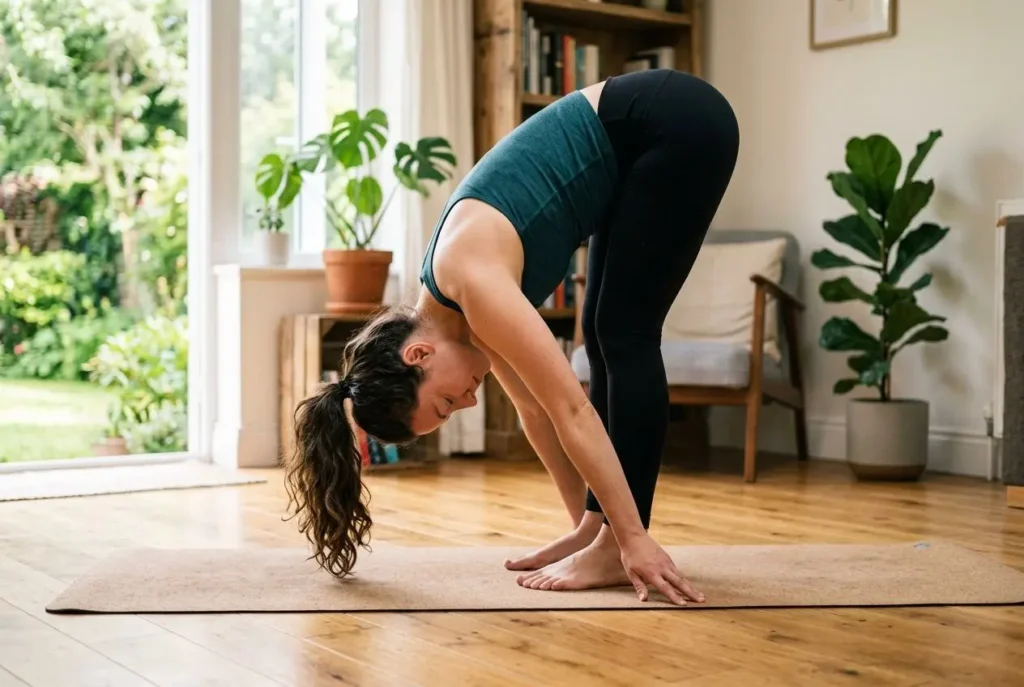
Key muscle groups every routine should target
For balanced flexibility, every stretching routine should carefully address all major muscle groups. Dedicated attention should be given to the neck, shoulder, chest, upper back, lower back, hips, hamstrings, and calves. Combining gentle static stretching with dynamic movements helps warm the muscles and improves overall joint health.
- Upper body focus: Include stretches for the neck, shoulders, and chest, as well as a good back stretch to prepare your torso for deeper forward bends.
- Core and spine: Incorporate exercises like a torso twist to maintain spinal mobility and relieve pressure on the lower back.
- Lower body foundation: Stretching the hips, hamstrings, quads, calves, and feet creates a strong, stable base for all types of movement.
Stretching exercises progressively lengthen each muscle group, helping you build lasting improvements in your joint mobility. When you hold stretch positions while focusing on deep breathing, your nervous system gradually adapts and allows a greater range of motion.
Types of yoga stretching exercises explained
Yoga stretching exercises use a variety of techniques, each designed for different purposes in your daily routine. Dynamic stretches such as controlled, rhythmic leg swings help warm up muscles before activity. Full body stretching blends these dynamic methods with longer holds to maximize your flexibility.
Traditional static stretching involves holding a pose at its endpoint for 20 to 60 seconds. If you’re a beginner, start with shorter holds and slowly work your way up to 30 seconds per side. More advanced full-body stretching techniques include combining isometric contractions with passive stretching to speed up flexibility gains.
How to sequence a balanced full body session
The best way to structure a full body stretching routine is to move smoothly from the upper body down to the lower body. This logical progression minimizes transition time and keeps you mentally focused. Start with gentle dynamic movements to warm up your connective tissues before moving on to deeper poses.
Always end your session with restorative poses to calm your nervous system after a full body stretch. Avoid deep static stretching right before any strength or power training to maintain your performance. Instead, use dynamic stretches during warm-ups and save static holds for after your workout.
Best Yoga Stretching Exercises for Beginners at Home
A beginner-friendly full body stretch combines gentle, accessible poses with gradual progress. Gentle flow yoga provides an ideal low-intensity routine focused on mindful breathing. Using props and adjustments helps ensure each stretch remains safe and comfortable.
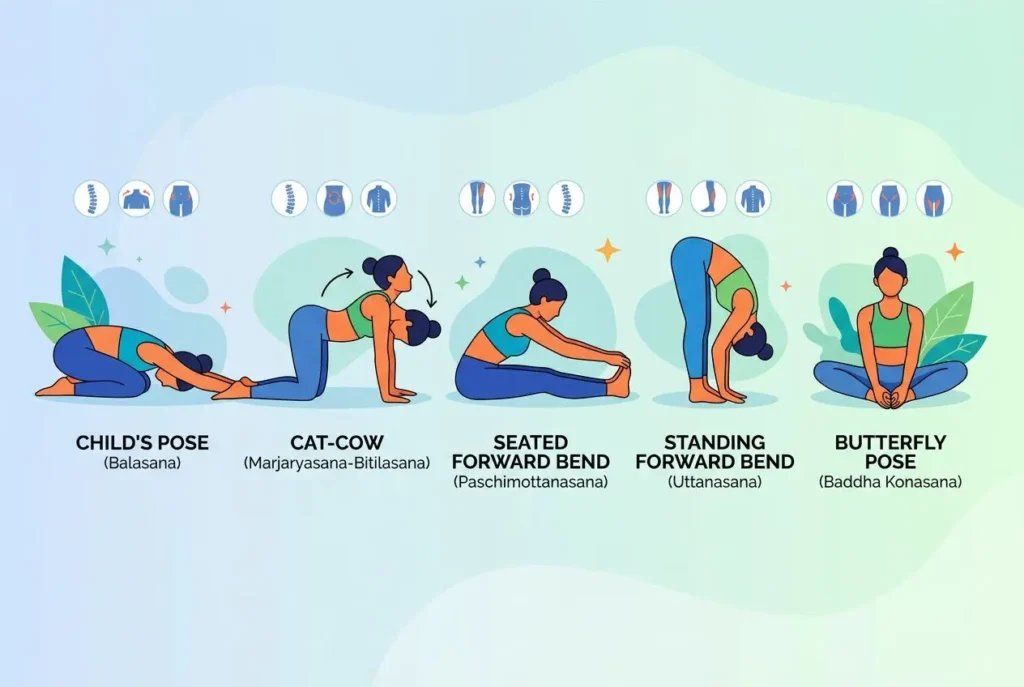
Gentle Flow Poses to Open the Whole Body
Effective yoga stretching exercises for beginners concentrate on fundamental movements to develop body awareness. Key poses include the calf stretch, performed by staggering your feet and pressing your heel down. You can also practice a hamstring stretch by extending one leg and folding forward while keeping your back straight.
- Downward-Facing Dog: From your start position, lift your hips into a V-shape. Maintain slightly bent knees to safely open your shoulder joints and lengthen your spine.
- Runner’s Lunge: Step forward with a bent knee, lowering your hips toward the floor. This pose effectively targets your hip flexors for deeper release.
- Forward Bend: Fold at your hips with soft knees, allowing your head to hang. Gentle rocking for 20 seconds safely extends your spine and hamstring.
- Child’s Pose: Kneel with your big toes touching, sinking your hips back toward your heels. Extend your arms forward and breathe deeply to naturally soothe your lower back.
The knee-to-chest pose gently releases the lower back and suits all experience levels. Using yoga blocks and straps supports proper alignment during stretching exercises. These simple tools reduce strain and allow you to comfortably hold deeper stretches in any pose.
Hamstring and Lower Body Stretches Made Accessible
A dedicated hamstring stretch is essential for developing a solid flexibility routine at home. Sit with one leg extended, fold from your hips, and maintain a straight back as you reach forward. Adding a slight knee bend protects your lower back from unnecessary strain.
Lower body yoga stretching exercises focus on large muscle groups to build foundational flexibility. Consistent practice significantly reduces daily stiffness and enhances mobility. A good glute stretch complements leg stretches for comprehensive lower body opening.
| Stretch Name | Start Position | Hold Duration | Key Modification |
| Hamstring Stretch | Seated, one leg extended | 30 seconds per side | Slight knee bend protects lower back |
| Calf Stretch | Staggered stance facing wall | 30 seconds per side | Heel pressed firmly into ground |
| Glute Stretch | Supine, knee drawn to chest | 30 seconds per side | Keep neck relaxed and neutral |
| Hip Flexor Lunge | Half-kneeling position | 30 seconds per side | Tuck pelvis under for deeper opening |
Placing blocks under your hands during forward folds helps maintain spinal length without straining. Using cushions under your knees in butterfly pose reduces joint stress. These smart adjustments make your flexibility routine more sustainable and enjoyable.
Breathing and Safety Tips for a Beginner Routine
A breath-focused approach ensures safety while exploring different yoga stretching exercises. Inhale to lengthen your spine, and exhale to gently deepen your pose. Steady breathing keeps your nervous system calm and prevents muscle tension.
- Breathing pattern: Inhale for four counts and exhale for four counts to naturally deepen the stretch.
- Pain awareness: Immediately stop or adjust any movement causing sharp pain. Mild tension indicates an effective stretch without injury risk.
- Progression timing: Begin with shorter holds, increasing duration weekly as your flexibility improves.
- Alignment priority: Prioritize proper spinal alignment using supportive props to protect your joints.
Incorrect technique or excessive force can lead to joint instability or ligament damage. Progress gradually to establish safe movement patterns for long-term success. Working with an instructor initially helps you safely master these yoga stretching exercises for beginners.
Deep full body pose holds for lasting flexibility gains
A yin yoga full body stretch uses sustained holds of three to five minutes to target your fascia, ligaments, and joints. This mindful approach builds lasting flexibility through progressive tissue lengthening. Programs like Yin yoga teacher training emphasize how deep flexibility training engages the parasympathetic nervous system to reduce stress.
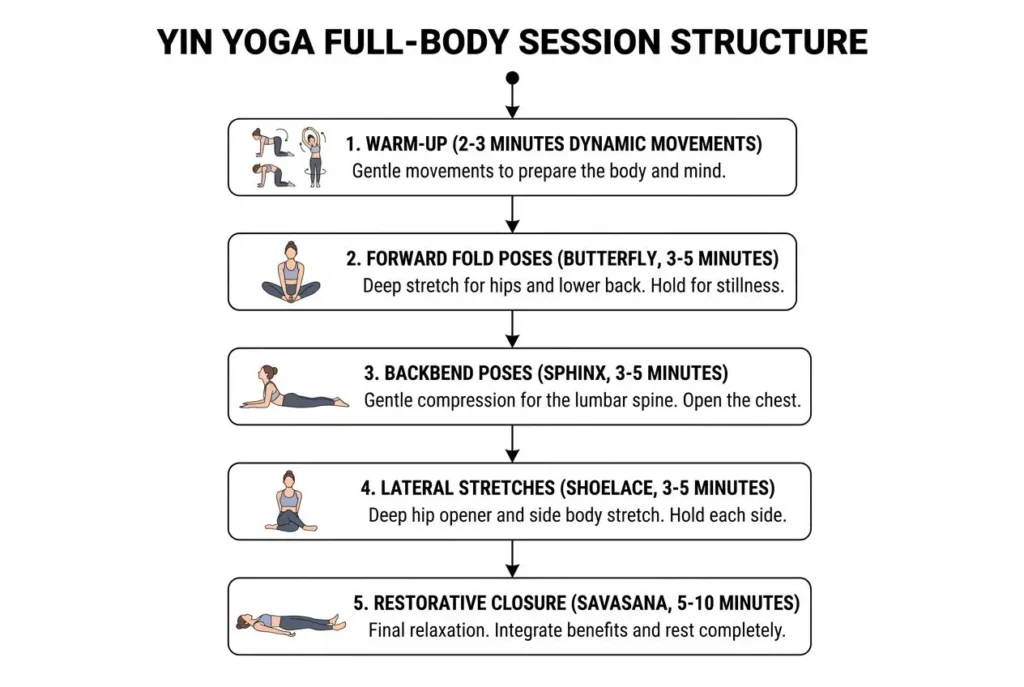
Yin yoga and the butterfly pose for hip opening
The Butterfly pose is a foundational movement that gently targets your inner thighs, adductors, and hip joints. By sitting tall, bringing the soles of your feet together, and hinging forward, you release deep groin tension. Hold this posture for three to five minutes, using props to support your joints.
- Proper alignment: Sit upright and press the soles of your feet together. Lengthen your spine before gently hinging forward to protect your lower back.
- Props for comfort: Place blocks or cushions under your knees to minimize strain. This encourages deeper stretches without causing discomfort or stressing your joints.
- Breath integration: Inhale to lengthen your spine; exhale to deepen your forward fold. This breathing rhythm naturally enhances your overall flexibility.
The Dragonfly pose engages your hamstring, inner groin, and adductors simultaneously. Holding the pose for three to five minutes with an elongated spine encourages your connective tissues to lengthen without force. An effective sequence combines Butterfly and Dragonfly holds with gentle seated twists.
How often should you stretch for real progress
Consistency is key for meaningful gains in a stretching routine. Practicing three to four times per week for five to thirty minutes yields better results than sporadic, longer sessions. A short minute full body routine maintains mobility, while extended practices allow for deeper exploration.
Incorporating a consistent daily routine gradually improves joint mobility. Your body responds better to regular daily stretching than to occasional intense workouts. A full body stretch practiced daily provides cumulative benefits that lead to lasting improvements.
Benefits of stretching beyond flexibility
Regular full-body stretching improves your joint range of motion and reduces injury risk. This kind of body stretching activates the parasympathetic nervous system during longer holds, helping lower cortisol levels, relax muscles, and enhance deep tissue circulation.
- Improved daily function: Better mobility makes activities like reaching, bending, and twisting easier and more comfortable.
- Stress reduction: Stretching paired with mindful breathing reduces anxiety and promotes emotional balance.
- Better sleep quality: Evening stretching with focused breathing eases the transition to sleep and supports deeper rest.
- Injury prevention: Enhanced muscle coordination helps reduce the risk of injury during exercise and daily movement.
Gentle movement can help individuals with arthritis by reducing joint pain and stiffness. This type of practice also improves mental health by reducing fatigue. It’s especially beneficial for people with sedentary lifestyles who may lack regular physical activity.
The butterfly pose stretch supports digestion through gentle hip opening and nervous system engagement. Ending your practice with restorative postures integrates these benefits, leaving you feeling calm, centered, and deeply relaxed.
Frequently Asked Questions
What is the best full-body stretching routine for my flexibility level?
The best fullbody stretching routine should be tailored to your current flexibility and schedule. Beginners often start with five or six fundamental movements, holding each pose for about 20-30 seconds. As your practice evolves, gradually extend these holds to deepen your stretches and improve your progress.
More advanced practitioners might enjoy holding poses for three to five minutes, which allows for deeper targeting of connective tissues. Gentle flow yoga also offers adaptable options for all levels, using props and modifications to support individual needs. You can choose practice durations anywhere from 5 to 30 minutes, depending on your availability.
Even a brief five-minute daily routine can help maintain your range of motion and reduce stiffness. A longer, 30-minute full-body stretch session gives you more time to explore and enjoy deeper movements. Consistency is key regular practice, even if shorter, tends to be more effective than infrequent, extended sessions.
How often should I perform a full-body stretching routine to see real progress?
For lasting flexibility gains, aim to incorporate a full-body stretching routine into your week three to four times. Even short five-minute sessions can keep your muscles responsive and support overall physical wellness. Longer weekly sessions allow for exploring deeper poses and more focused stretching.
If you’re new to stretching, you’ll likely notice improvements in just a few weeks of regular practice. Experienced stretchers often combine brief daily sessions with longer weekly routines to maintain and deepen flexibility, particularly in areas like the shoulders and hips.
Morning stretches can help reduce stiffness and prepare your body for the day. Evening sessions, on the other hand, gently engage your relaxation response, supporting better sleep. Balancing both can help you build a sustainable daily routine that promotes both mobility and calm.
Does regular stretching help with stress reduction and mental wellness alongside physical flexibility?
Absolutely. Regular stretching offers mental and emotional benefits in addition to enhancing physical flexibility. By combining movement with mindful breathing, you boost oxygen flow, which helps release tension and calm the nervous system. This practice can quiet a busy mind and encourage deep relaxation.
Gentle styles like Yin yoga have also been shown to reduce cortisol levels and promote emotional balance. Adding a simple stretching routine before bed can trigger your body’s relaxation response, alleviating anxiety and promoting restful sleep.
People who stretch consistently often report lower stress, reduced fatigue, and better moodespecially those with high-demand schedules. Making light, mindful movement part of your daily routine builds a lasting wellness habit that supports both body and mind.
