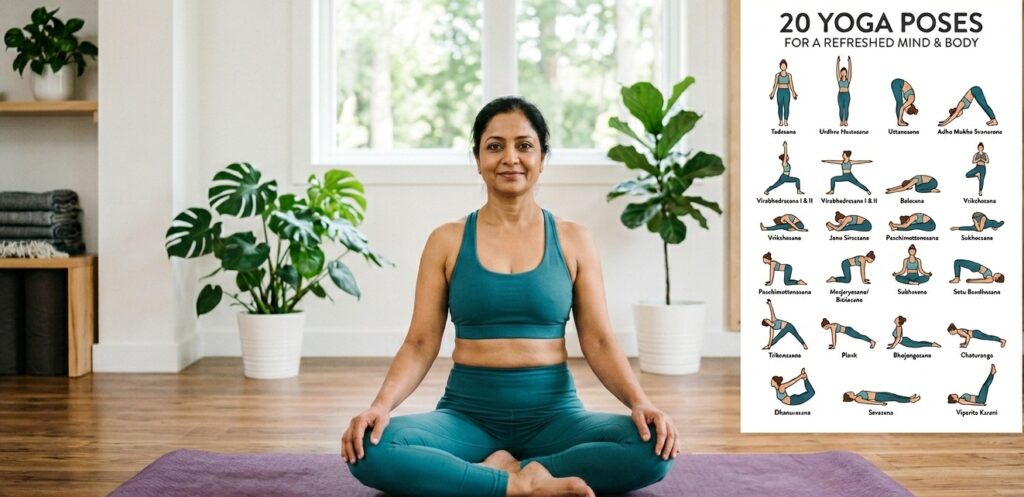
Explore this comprehensive guide featuring 20 essential yoga poses for practitioners of every level. Whether you’re just beginning or looking to deepen your yoga practice, this collection details each foundational yoga pose. You’ll learn the Sanskrit names, alignment tips, and breathing techniques for every asana.
20 Essential Yoga Poses and Asanas for Every Level
Our curated selection of yoga poses and asanas spans from simple basics to more advanced movements. They are arranged in a progressive sequence designed to build your strength and flexibility. Aayana Yoga Academy developed this guide for our studio and online students to master these key techniques.
Beginner Yoga Pose Options to Start Your Practice
Starting your journey with yoga for beginners calls for simple postures that build confidence. These beginner poses help establish proper alignment habits early on. They also develop the essential flexibility and core strength needed for safe progression.
- Mountain Pose (Tadasana): This standing posture creates a solid foundation for all vertical movements by grounding through the feet.
- Child’s Pose (Balasana): A restful position that stretches the hips and shoulders while calming the mind.
- Butterfly Pose (Baddha Konasana): This seated hip-opener releases tension and enhances flexibility through a deep, passive stretch.
The butterfly pose guide demonstrates how practicing this posture twice a week can significantly improve hip mobility. These beginner-friendly yoga poses provide a sturdy foundation before attempting more challenging variations.
Intermediate Yoga Pose Progressions and Key Transitions
Intermediate practitioners develop a deeper body awareness that is difficult to cultivate alone. You will transition from a foundational yoga pose to more complex shapes that require precise adjustments. For example, the plank pose prepares your body for arm balances and inversions.
A structured routine values your actual experience over achieving perfect form. The sphinx pose benefits those seeking gentle spinal compression and improved posture. Using props like blocks can help you advance safely during your practice sessions.
| Intermediate Pose | Primary Benefits | Practice Duration |
| Plank Pose | Core strength, shoulder stability, and preparation for arm balances | 30–60 seconds, 3 times weekly |
| Warrior 3 | Better balance, hamstring flexibility, hip stability, and core engagement | 20–30 seconds per side, 2–3 times weekly |
| Revolved Triangle | Spinal rotation, hamstring opening, and core activation with block support | 30–45 seconds per side, 2–3 times weekly |
| Half Moon Pose | Balance improvement, hip opening, hamstring stretch, and core activation | 20–30 seconds per side, 2–3 times weekly |
Yin Yoga Poses for Deep Opening and Relaxation
Yin yoga soothes the nervous system with long, passive holds that target deep connective tissues. Happy Baby Pose is a perfect example of this relaxing style, encouraging you to let go and release years of stored tension.
The Happy Baby pose is performed supine to provide deep relief for the lower back. Other calming postures include lotus pose, camel pose, and plow pose. Together, these movements create a well-rounded and restorative sequence.
How to Choose the Right Yoga Pose for Your Body
Selecting the right posture requires an honest assessment of your flexibility, strength, and personal goals. Excellent yoga tips advise always listening to your body rather than forcing an alignment. This mindful approach helps prevent injuries while building a sustainable practice.
Consider focusing on areas that align with your specific physical needs. Effective yoga for beginners often requires modifications, especially for those with knee concerns. Individuals with lower back pain will benefit from gentle forward bend sequences.
Connecting your breath to movement during your yoga practice helps keep your mind present. This connection aids in maintaining balance and calming the nervous system, whether you are performing standing, seated, or supine poses.
Frequently Asked Questions
What are the 20 essential yoga poses everyone should know?
The essential collection of 20 yoga poses includes foundational postures like Mountain pose, Child’s pose, and the classic Plank pose. It also features more dynamic shapes such as Revolved Triangle, Half Moon pose, Wheel pose, and Side Angle pose. The list is rounded out by Extended Angle pose, Camel pose, Plow pose, Shoulderstand, Lotus pose, Wild Thing pose, and the calming final posture of Savasana. Each yoga pose is presented with its traditional Sanskrit name, along with helpful modifications and suggestions for when to practice it.
How long should I hold each yoga pose during practice?
Holding times for a yoga pose vary based on your practice style and intention. You might hold a standing posture or a challenging balance pose for 20 to 60 seconds to develop strength. A seated stretch or deep forward bend, on the other hand, is often held for one to three minutes to progressively improve flexibility.
Can beginners practice all 20 yoga poses safely?
Those starting their journey with yoga for beginners should first master the foundational poses before exploring more advanced variations. It is essential to build a base of core strength before attempting complex arm balance poses or deep backbends like wheel pose. Always follow key yoga tips, such as using props to support proper alignment instead of pushing your body into an uncomfortable final posture.
