Getting started with yoga is much easier with this curated guide to 10 essential yoga poses for beginners. You’ll discover foundational movements designed to build flexibility, strength, and body awareness through simple, clear instructions. This article will teach you safe practices and show you how to create a beginner-friendly yoga routine that fits into a busy schedule.
10 Essential Yoga Poses Every Beginner Should Know
Learning yoga asanas for beginners means understanding how different poses serve unique purposes. These 10 yoga poses will help you establish a strong physical foundation. Based on the beginner yoga poses classification, these movements fall into categories including standing, seated, balancing, and bending postures.
Which Yoga Pose Should Beginners Learn First?
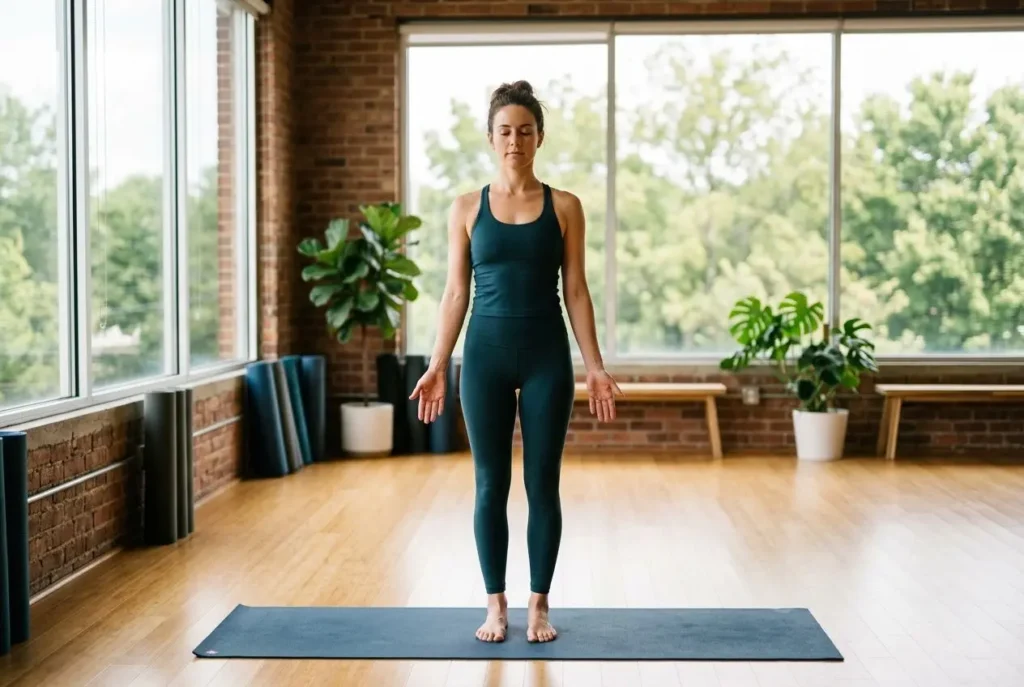
Mountain Pose creates the foundation for all standing poses for beginners. Stand with your feet hip-width apart, distribute your weight evenly, and lengthen your spine upward. Hold this pose for 30-45 seconds while maintaining steady breathing to build core strength.
Child’s Pose serves as an excellent resting position during your practice. Sit back on your heels, fold forward, and gently rest your forehead on the mat. Remaining here for a few minutes calms the nervous system, opens the hip area, and releases tension.
Easy Pose naturally grounds you for breathing exercises. Sit cross-legged with a straight spine and relaxed shoulders to practice focused breathing techniques. This foundational asana prepares both mind and body for deeper stretches.
Standing and Grounding Yoga Asanas for Beginners
Warrior I develops lower-body strength and stamina through active muscle engagement. Step one foot forward, turn your back foot slightly, raise your arms overhead, and bend your front knee. Hold this stance for about a minute while breathing deeply to strengthen your legs.
Tree Pose improves single-leg balance, which is essential for many yoga moves for beginners. Shift your weight to one foot, place the sole of your other foot on your inner thigh or calf, and fix your gaze on a steady point. Hold briefly to let your body naturally find its stability.
Floor-Based Poses to Open the Spine and Hips
Downward-Facing Dog creates an inverted V-shape to stretch your back muscles. From a tabletop position, lift your hips upward, press your palms firmly into the mat, and hold the shape. Bend your knees slightly if needed to protect your lower back during this stretch.
Bridge Pose engages your lower back while gently opening your chest. Lie on your back, press your feet into the floor, and lift your hips upward. This backbend strengthens your body and beautifully balances out your overall yoga routine.
How to sequence yoga moves for beginners step by step
Creating a well-balanced beginner yoga sequence helps you warm up gently, build strength gradually, and finish with calming, restorative postures. We provide clear guidance on arranging yoga moves for beginners, always respecting your body’s current readiness. This thoughtful approach helps prevent injury while improving flexibility and boosting your overall confidence.
Warm-up and standing yoga pose flow for new students
Begin each yoga practice with seated breathing to calm your mind before you start practicing yoga. Simply inhale for four counts, pause briefly, then exhale for six, repeating this cycle a few times. Next, perform gentle warm-ups like neck rolls to prepare your body for any beginner yoga poses and asana work.
- Neck rolls: Slowly and gently rotate your head in smooth circles to release tension and increase mobility.
- Shoulder circles: Move your shoulders in slow, controlled circles first backward, then forward to awaken the muscles of the upper back.
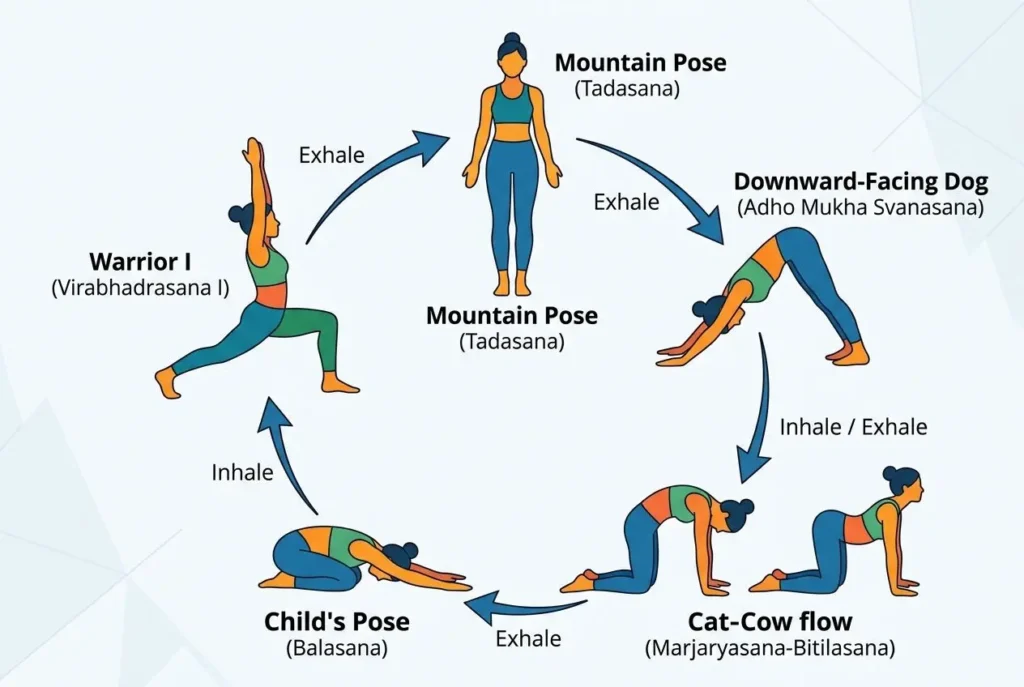
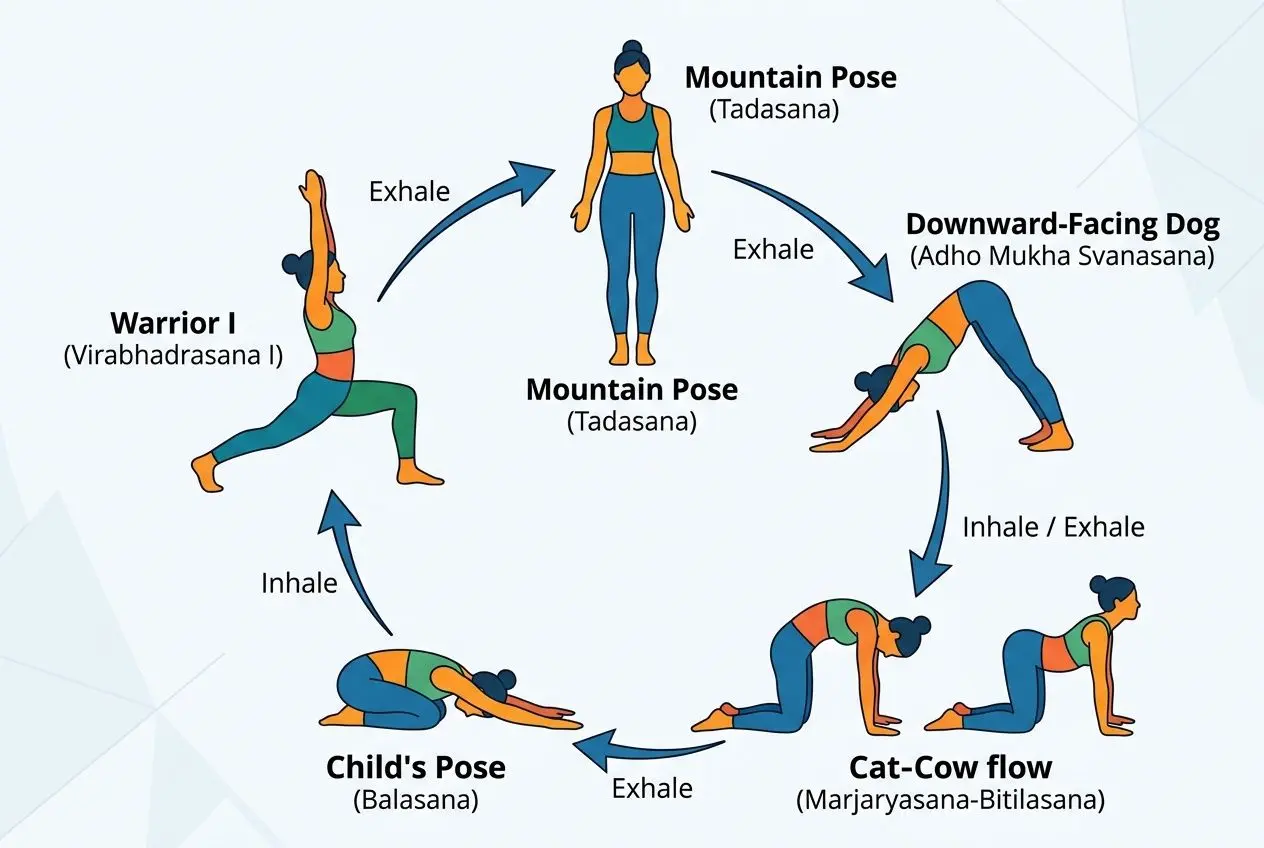
- Cat-Cow flow: On your hands and knees, inhale and gently arch your back, then exhale as you round your spine.
Next, transition to standing poses such as Mountain Pose and Warrior I, holding each with steady breathing for stability. These foundational standing poses build leg strength and improve balance. They also help establish proper alignment, which is essential for a safe and effective yoga practice.
| Pose Name | Hold Duration | Primary Benefits |
| Mountain Pose | 30-45 seconds | Alignment, leg strength, core awareness |
| Warrior I | 30-60 seconds | Lower-body strength, stamina, balance |
| Tree Pose | 30-60 seconds per side | Single-leg balance, focus, ankle stability |
| Triangle Pose | 30-60 seconds per side | Side-body opening, hamstring flexibility |
| Warrior II | 30-60 seconds per side | Hip opening, leg strengthening, mental focus |
Balancing and stretching poses to build confidence
Practicing Triangle Pose promotes side-body opening and hamstring flexibility, which is essential for any beginner yoga routine. Place your feet wide apart, reach your front hand toward the ground, and extend your opposite arm upward. Hold this yoga pose for up to a minute on each side, breathing deeply to release any tension.
A standing forward bend transitions your routine toward floor-based stretches, targeting your hamstrings. Hinge gently at your hip, keeping your spine long as your arms reach toward the floor. Hold this soothing stretch for about a minute, allowing gravity to deepen the release naturally.
Linking poses with breath in a beginner sequence
Sun Salutations link 12 basic yoga movements into a flowing sequence that synchronizes movement with breath. You’ll transition through postures like Plank and Downward Dog with mindful control. Inhale during expansive movements and exhale during deeper engagements, gradually warming and energizing your entire body.
Move smoothly from your standing forward bend into Plank Pose by stepping your feet back carefully. Engage your core, relax your shoulders, and hold the pose briefly while maintaining steady breathing. This basic yoga transition strengthens your arms, wrists, core, and entire spine over time.
Flow gracefully from Plank into Cobra Pose by lowering your body gently. Press your chest upward while keeping your elbows close to your sides to open your heart. Maintaining smooth, rhythmic breathing throughout the sequence boosts circulation and deepens the vital mind-body connection.
Safe Yoga Exercises for Beginners with Props and Modifications
Practicing yoga safely as a beginner depends on proper alignment, using props wisely, and understanding the difference between healthy stretching and pain. At Aayana Yoga Academy, we emphasize modifications that let you enjoy every asana comfortably without strain. Blocks, straps, and bolsters help you adapt each movement to your personal flexibility level.
How to Use Props to Protect Alignment in Each Yoga Pose
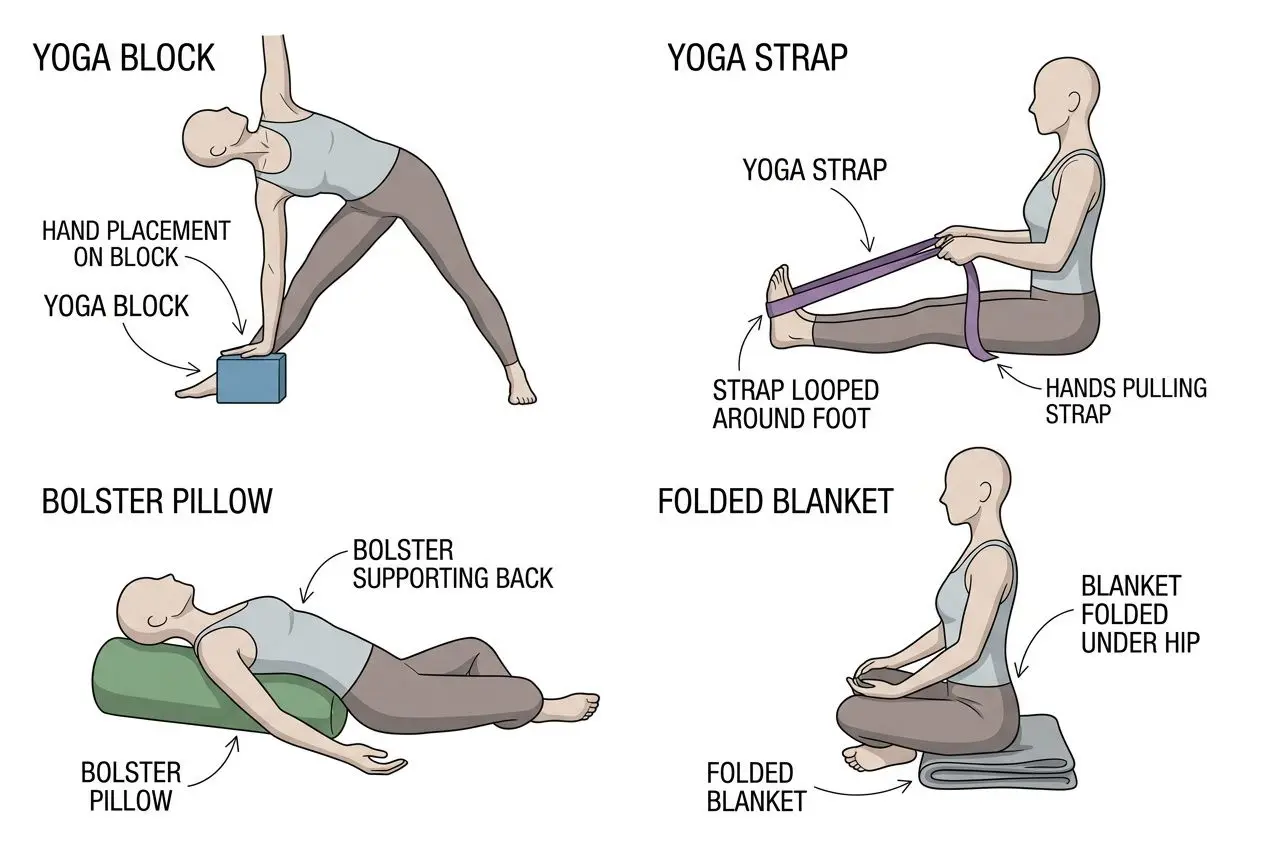
Props make yoga poses more accessible by reducing stress on vulnerable joints. For example, placing a block under your hands during a forward bend lets you reach the ground safely and maintain proper alignment. A strap can help extend your reach in leg stretches without forcing your hip into an uncomfortable position.
- Yoga blocks: Use these under your hands, head, or hips to reduce strain and keep your spine in a neutral position.
- Yoga straps: Loop them around your feet or legs to gently improve your range of motion during stretches.
- Blankets or bolsters: Place these under your hips or knees in seated poses for cushioning and support during longer holds.
- Walls or foam blocks: Use these for balance and stability in standing poses, helping build confidence gradually.
Hold each yoga pose for about 15 to 20 seconds initially, gradually increasing duration over time. This careful pacing protects your ligaments, tendons, and connective tissues while improving flexibility. Always distinguish between a gentle stretch and sharp pain to maintain beginner yoga safety.
Yin and Aerial Yoga as Gentle Alternatives for Newcomers
For a fun and supportive start, beginner aerial yoga lets you practice poses in a soft hammock. This approach reduces joint pressure and offers gentle spinal decompression. Typical sessions include warm-ups, guided hammock movements, and a relaxing cooldown.
Yin yoga emphasizes beginner yoga safety through passive, sustained holds that target deep connective tissues. You can explore yin yoga basics with poses like Butterfly or Sphinx, using props for support as needed. This introspective style promotes balanced development for all body types.
How Often Should Beginners Practice and for How Long?
For beginners, practicing yoga exercises for beginners two to three times a week for around 20 minutes helps build consistency safely. This schedule allows muscles to recover and adapt. Keeping track of how you feel after each session can help maintain motivation.
Always end your practice with savasana, or corpse pose, for at least five minutes. Lie flat on your back with arms relaxed to fully absorb the benefits of your yoga practice. This final rest improves sleep quality and calms the nervous system.
Frequently Asked Questions
What are the 10 basic yoga poses every beginner should practice?
The 10 essential yoga poses for beginners include foundational asanas like mountain pose, downward dog, triangle pose, and cobra pose. These basic yoga poses provide an excellent starting point for anyone beginning their practice. By regularly performing these 10 yoga poses, you’ll gradually develop greater flexibility, strength, and overall balance.
How long should beginners hold each yoga pose?
Begin by holding easy yoga poses for about 15 to 20 seconds while focusing on your breathing. As your practice progresses, holding a yoga pose or asana for a full minute can significantly enhance the benefits of these basic poses. Restorative postures such as savasana are typically held for several minutes to encourage deep relaxation and recovery.
Can I practice yoga poses for beginners if I have knee or back issues?
Absolutely! You can safely explore poses for beginners by incorporating props to adapt basic yoga to your needs. Use a folded blanket for extra support during a knee pose, or employ yoga blocks to ease into a forward bend. It’s always wise to consult with a certified instructor before attempting yoga poses for beginners to ensure you practice safely and effectively.
