
Yoga for flexibility and strength is a fantastic starting point for beginners seeking a more supple and mobile body. This guide introduces gentle beginner yoga poses that build strength while gradually improving your range of motion, making every stretch feel safe and rewarding. By focusing on steady breath and mindful alignment, most newcomers experience better posture, improved flexibility, and reduced tension in the lower back within just a few consistent weeks of practice.
A recent pilot study tracked women aged 40-65 who attended a single 90-minute Iyengar yoga session each week for six weeks. Researchers documented significant gains in lumbar mobility and hamstring range of motion, demonstrating that a manageable schedule can effectively boost flexibility and strength. These findings support Iyengar yoga flexibility training as a practical option for busy beginners who want to stretch effectively without committing to an exhaustive routine.
Best Yoga Poses for Flexibility for Beginners
Foundational beginner yoga poses are designed to lengthen tight muscles while teaching proper alignment, which protects your joints and promotes balanced strength. Mastering these positions first helps prevent injury and prepares your body for deeper stretches as you progress. Each yoga pose detailed below focuses on areas that commonly restrict mobility in daily life.
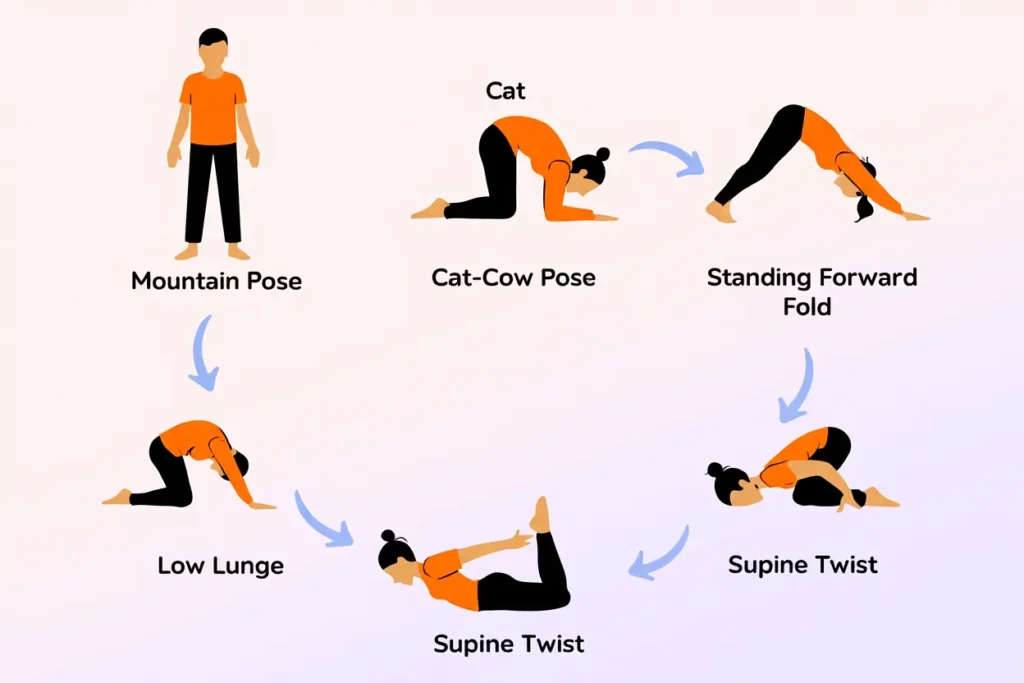
Which Poses Best Open Hips and Hamstrings?
Since prolonged sitting often leads to tight hip flexors and hamstrings, beginner yoga poses should target both of these areas. The Low Lunge, Standing Forward Fold, and Seated Wide-Legged Forward Bend gradually increase your range of motion while also engaging your core for stability and balance. With patient practice, these stretches make daily movements like bending, walking, and squatting much easier.
- Standing Forward Fold (Uttanasana): Lengthen your spine, soften your knees if necessary, and allow gravity to gently stretch your hamstrings and calves. Hold for 30–60 seconds.
- Low Lunge (Anjaneyasana): Step one foot forward, lower your back knee to the floor, and sink your hips to release your hip flexors and quadriceps. Keep your torso upright throughout.
- Seated Wide-Legged Forward Bend (Upavistha Konasana): Sit tall with your legs spread wide, hinge forward from your hips, and fold to stretch your inner thighs, hamstrings, and lower back. Engage your core for support.
Repeating these stretches three to five times a week and holding each for 30–60 seconds will quickly enhance your hip mobility, balance, and overall flexibility and strength. Remember to use each exhale to gently guide your body deeper into the stretch, avoiding any strain.
How to Use Props to Deepen Stretches Safely
Props like blocks, straps, and bolsters can make stretching safer by supporting proper posture and preventing overextension. For instance, looping a strap around your foot during a hamstring stretch helps maintain a neutral spine and protects your lower back. Similarly, placing a block under your hand in Half Moon Pose can improve balance, while a bolster under your sacrum in a Supported Bridge Pose gently opens your chest.
As your flexibility and strength improve, gradually reduce the height or support of your props. Always move with steady breath and mindful control. This methodical approach builds confidence and allows your joints and connective tissues to adapt safely.
How Long Should Beginners Hold Flexibility Poses?
Beginners should start by holding each stretch for 10–30 seconds, prioritizing smooth breathing and correct alignment over depth. Over two or three weeks, you can gradually extend these holds to 45–60 seconds as your body adapts and mobility increases. A gentle pulling sensation is normal, but sharp pain is a sign to ease off, reset your posture, and breathe before carefully trying again.
Coordinating your breath with movementinhaling to lengthen and exhaling to deepenenhances mind-body awareness, a key element of how to improve flexibility yoga. This rhythmic breathing protects your joints, strengthens your core, and ensures steady progress for every beginner.
Building strength and flexibility together fosters balanced, functional fitness that enhances the way you move every day. Yoga masterfully combines weight-bearing poses that build lean muscle with stretching movements that lengthen your connective tissues, creating a comprehensive conditioning method. This dual approach helps to correct muscular imbalances, strengthens your entire body, and boosts your body’s overall resilience to everyday stress.
Combining strength and flexibility training in this way is very different from traditional gym workouts, which often focus on isolating muscles and repeating static motions. Instead, beginner yoga encourages integrated strength across full movement patterns, allowing you to lift, bend, carry, and reach with a fuller range of motion, all while lengthening tissues for lasting mobility.
How does yoga build both strength and flexibility together
Full body yoga for strength and flexibility engages many muscle groups at the same time through weight-bearing poses and intentional stretching, creating a harmonious training effect. Each yoga pose requires stability while your connective tissues stretch, which means your muscles strengthen without becoming overly tight, leading to balanced power and enhanced mobility.
Key poses that train strength and flexibility at once
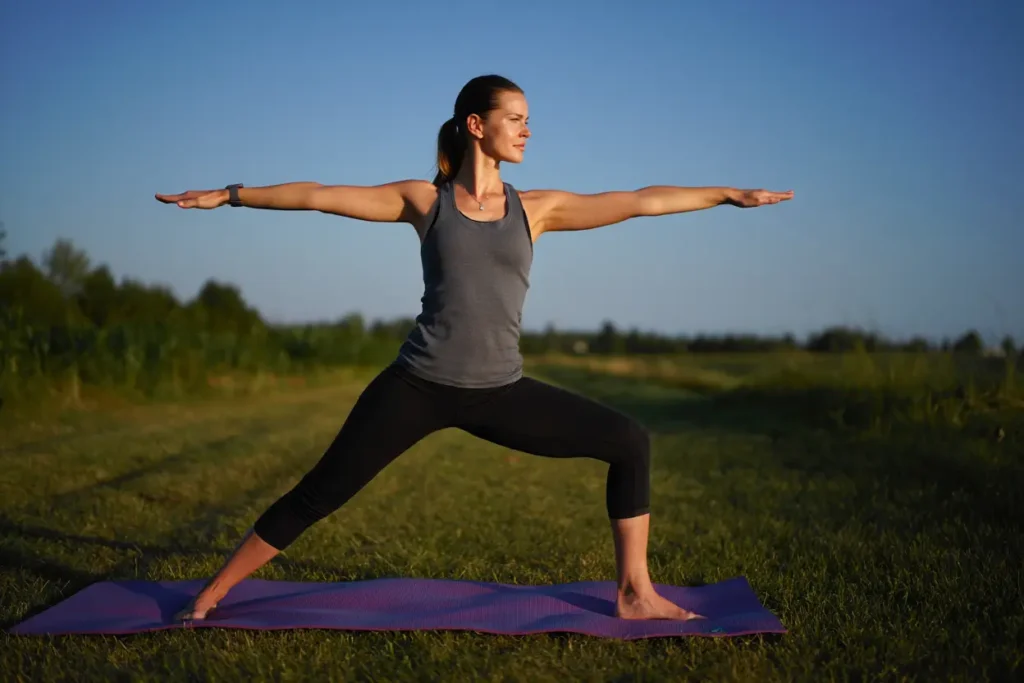
Certain foundational yoga poses efficiently develop both flexibility and strength in a single movement, making them ideal beginner yoga poses for flexibility and strength. Downward-Facing Dog, for example, stretches your calves, hamstrings, and spine, while bearing weight through your arms builds shoulder and core strength. Chair Pose tones your quadriceps, glutes, and core, opens the chest, stretches the ankles, and challenges your balance, making every mindful breath a step toward progress.
Plank Pose strengthens your entire front body, including shoulders, chest, core, and quadriceps, by maintaining alignment from your head to your heels. Bridge Pose activates your glutes, hamstrings, and lower back, while also stretching the hip flexors and opening your chestholding it for 30 seconds helps strengthen your posterior chain. Warrior II builds leg strength in the quads and glutes while lengthening the hip adductors, expanding the chest, and improving stability in the lower body.
| Pose Name | Primary Strength Focus | Primary Flexibility Focus | Hold Duration |
| Downward-Facing Dog | Shoulders, arms, core | Hamstrings, calves, spine | 5–8 breaths |
| Chair Pose (Utkatasana) | Quadriceps, glutes, core | Chest, ankles | 3–5 breaths |
| Warrior II (Virabhadrasana II) | Quadriceps, glutes, core | Hip adductors, chest | 3–5 breaths per side |
| Plank Pose (Phalakasana) | Shoulders, chest, core, quads | Hamstrings, wrists | 20–30 seconds |
| Bridge Pose (Setu Bandhasana) | Glutes, hamstrings, lower back | Chest, hip flexors | 30 seconds |
Linking these beginner yoga poses into fluid sequences amplifies their benefits, as moving continuously with coordinated breath builds endurance while stretches gradually increase your range of motion. Transitioning from Downward-Facing Dog through Warrior II and into Triangle Pose, for example, delivers a complete workout for the lower body, core, and spine, boosting balance, stability, and overall mobility.
Why vinyasa flow is ideal for full body conditioning
Vinyasa yoga synchronizes breath with flowing movement, stretching muscles and building strength at the same time, making it an excellent choice for anyone seeking both flexibility and resilience. Through Sun Salutations and thoughtfully crafted sequences, beginners warm up their tissues, target specific muscle groups, and gradually progress toward more challenging postures, all while mindful breathing maintains engagement and mobility. For deeper insights, check out this detailed guide on vinyasa yoga flexibility, which explains how this style simultaneously strengthens muscles and improves flexibility.
The beauty of vinyasa flow lies in its rhythmic continuity: each inhale lengthens the spine and opens the joints, while every exhale deepens muscular engagement, stabilizes the core, and stretches soft tissues. This dynamic movement generates internal heat, increasing muscle elasticity, and the brief holds strengthen stabilizersrepeating this cycle offers a clear answer to the question, how does yoga improve flexibility and build strength?
A typical vinyasa class begins with three to five rounds of Sun Salutations to boost circulation and prepare your joints for a fuller range of motion. Standing poses like the Warrior variations are then held for several breaths, strengthening the legs and opening the hip flexors, before transitioning into core-focused poses such as Plank, Side Plank, and Boat Pose to further build strength. Finally, moving through Low Lunge, Pigeon Pose, Bridge Pose, and gentle twists stretches the hamstrings, enhances hip mobility, strengthens the glutes, and leaves you with a refreshing sense of balance among stability, breath, and the benefits of stretching.
How to Build a Beginner Yoga Routine for Lasting Results
Establishing a practical beginner yoga routine ensures gradual improvements in flexibility and strength without pushing your body too hard. Kick things off with brief, daily 10–15 minute sessions, or aim for 2–3 shorter practices weekly. This gentle approach gives your muscles and joints time to adapt while building a strong habit through repetition and mindful breath.
As your confidence grows, slowly extend each yoga practice to 30–45 minutes. Begin incorporating deeper yoga stretches for flexibility and adding more strength-focused movements. This steady progression keeps motivation high, reduces discomfort, and creates a strong foundation for a lifelong practice centered on stability, balance, and lasting benefits.
Structuring Your Weekly Yoga Practice as a Beginner
A successful beginner yoga session starts with three to five rounds of Sun Salutations, warming up your muscles, boosting mobility, and connecting movement with breath. Then, move into standing poses to build strength and posture, include specific yoga stretches for flexibility, and finish with calming positions to relax your nervous system and support your progress.
- Warm-up phase (5–10 minutes): Flow through Cat-Cow stretches for one to two minutes, gently mobilizing your spine and coordinating each stretch with deep, conscious breathing.
- Standing strength phase (10–15 minutes): Hold Mountain Pose, Warrior I, Warrior II, and Triangle Pose, focusing on alignment while building lower-body endurance and full-body stability.
- Floor work and balance (8–12 minutes): Practice Plank, Bridge Pose, and Tree Pose to strengthen your core, posterior chain, and sense of balanceall of which improve overall range of motion and control.
For beginners, sticking to consistent 30–45 minute sessions three or four times a week is much more effective than occasional, longer practices. Scheduling your yoga on specific days helps build a routine, supports muscle memory, and steadily boosts flexibility and strength without overdoing it.
Which Yoga Style Suits Beginners at Home
Hatha Yoga is an excellent choice for beginners, offering clear alignment cues, slow transitions, and focused breath workall of which support stability and thoughtful stretching. Its steady, mindful pace develops flexibility and strength evenly, promoting good balance and posture that benefit everyday movement.
This traditional style works perfectly with beginner hatha yoga guidelines, providing structure without feeling overwhelming. Practitioners can refine yoga stretches for flexibility, build functional strength, and cultivate mental calmkey qualities of a well-rounded yoga practice.
If you’re looking for extra resistance, consider Mudgar Yoga, which blends classic mace exercises with flowing poses. The Mudgar yoga guide covers side-to-side swings, overhead lifts, and squats using a 1–2 kg macestrengthening shoulder stabilizers, wrist muscles, and your coresimilar to the approach in yoga for strength and flexibility Adriene.
- Hatha Yoga: Emphasizes alignment, gentle stretching, and foundational strengthideal for building stability and ensuring safe progress.
- Vinyasa Yoga: Connects poses through continuous movement guided by breath, boosting cardiovascular health, mobility, and dynamic flexibility.
- Mudgar Yoga: Merges functional strength training with traditional asanas, improving upper-body power and core stability.
Practicing yoga at home requires minimal geara mat is essential, and blocks or straps can help with deeper stretches. Choose a quiet, clutter-free space with good lighting. Aim for 20–30 minute sessions five days a week, and within six weeks you’ll likely notice clear improvements in both flexibility and strength.
Safety Tips and Progress Milestones to Track
Always maintain proper joint alignmentkeep hips over knees in Warrior I, shoulders over wrists in Plank, and ankles under hips in Forward Folds. This helps protect your connective tissues and ensures the right muscles are being engaged. Hold each pose for 10–30 seconds initially, gradually extending the time as you gain stability and comfort. Stop immediately if you feel sharp or intense paindiscomfort is normal, but pain is not.
Track your progress by noticing improvements in posture, less tension, and smoother transitions after the first two weeks. By week four, you’ll likely see an improved range of motion in lunges and forward folds. At the six-week mark, many beginners gain about 1.4 cm in sit-and-reach flexibility tests. Celebrate these wins, then set new goalslike perfecting your Triangle Pose alignment or trying more advanced yoga stretches for flexibility.
Frequently Asked Questions
Which yoga is best for flexibility for beginners?
Hatha Yoga offers an excellent gentle introduction to beginner yoga because it holds each yoga pose long enough to refine alignment, connect with your breath, and develop body awareness. Its deliberate pace helps improve balance, posture, and overall range of motion through gradual stretching. Similarly, an easy vinyasa flow warms up muscles before deepening the stretch, allowing newcomers to build strength safely while building a sustainable yoga practice.
How quickly will I see flexibility improvements from beginner yoga?
With consistent practice, you can typically notice gentle but measurable improvements in about six weeks. Research has shown an average increase of about 1.4 cm in sit-and-reach tests. Many people feel looser, stand taller, and find poses like downward-facing dog more comfortable within just two weeks, especially when practicing beginner yoga poses for 20–30 minutes about five times a week. Regular stretching enhances posture gradually and safely, showing that consistency is key for lasting flexibility gains in your yoga practice.
Can yoga build strength and flexibility at the same time?
Absolutely. Weight-bearing poses like plank, warrior II, bridge pose, and downward-facing dog build strength while also stretching surrounding tissues. This lets you develop both strength and flexibility simultaneously. Holding or moving through these yoga pose positions keeps stabilizer muscles engaged for balance, turning each stretch into effective resistance training. This functional approach often outperforms traditional stretching routines and supports a lifelong yoga practice with no extra equipment required.
