
Discovering yoga basics for beginners brings incredible benefits for both physical vitality and mental tranquility. This straightforward guide offers essential knowledge, foundational poses, and clear instructions that let anyone practice yoga safely at home while building flexibility and balance.
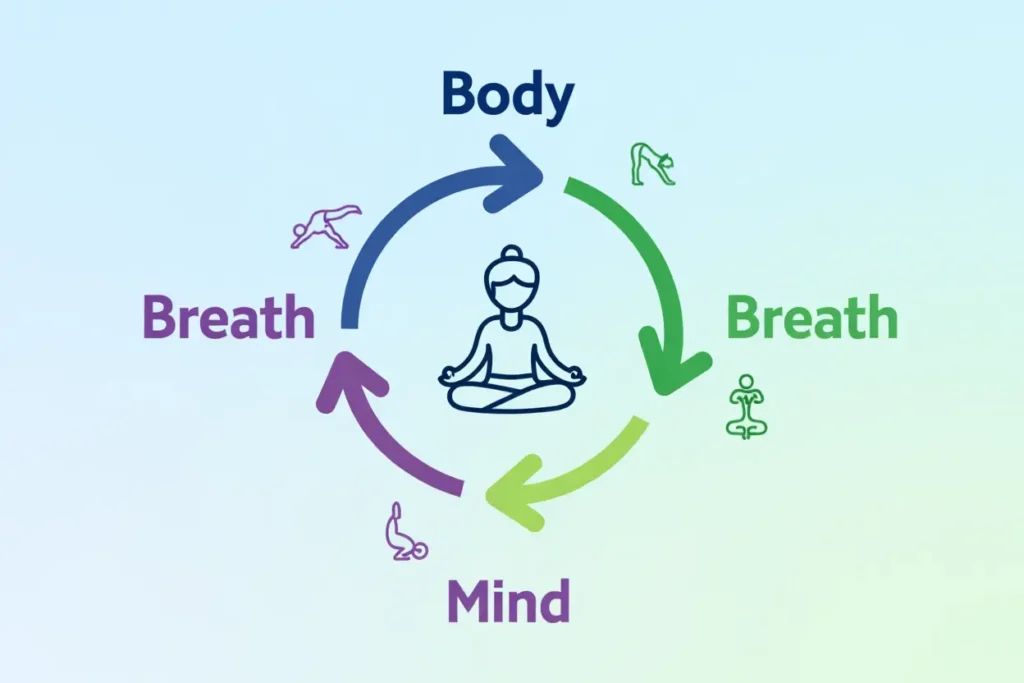
A comprehensive yoga guide for beginners explains that the Sanskrit word “yuj” means “to unite,” capturing how yoga harmonizes body, breathing, and mind. Most newcomers begin with hatha yoga, which blends mindful awareness with gentle postures and steady breathing to encourage relaxation. These yoga tips for beginners emphasize consistency over perfection, helping every student enjoy practicing yoga at a comfortable pace.
What every beginner should know before starting yoga
Beginning a new yoga practice calls for an open mindset: avoid comparing yourself to others and honor your body’s unique strengths. The beginner yoga guide encourages curiosity rather than competition, transforming your sessions from simple workouts into holistic mind-body experiences.
What is yoga and why it matters for beginners
Yoga weaves together physical postures, conscious breathing, and meditation to develop strength, awareness, and inner peace. Understanding this holistic purpose helps beginners approach each practice with realistic expectations: yoga for beginners is more than exercise; it equips you with lifelong tools for resilience. Reading the yoga basics article demonstrates how consistent practice can positively shape daily attitudes and habits.
- Physical benefits: Regular practice improves flexibility, circulation, posture, muscle tone, and bone strength.
- Mental benefits: Focused breathing and meditation reduce stress, improve concentration, and support better sleep.
- Accessibility: Yoga exercises for beginners can be adapted for all ages and body types; props like blocks or straps help maintain safe alignment.
Since yoga is for everyone, Aayana Yoga Academy offers hatha yoga and gentle Vinyasa classes that move at a relaxed pace, explain proper alignment, and build confidence. These beginner yoga programs encourage gradual progress without strain.
How to prepare your space, body, and mindset
Set up a quiet, clean area with a non-slip yoga mat, comfortable clothing, fresh air, and few distractions. Turn off your phone, soften the lighting, and practice simple yoga exercises for beginners barefoot to feel connected to the ground. Starting with a few minutes of quiet breathing helps center your mind and prepare your body for an effective yoga practice.
- Dedicated space: Choose one tidy spot so your mind associates that area with practice and calm.
- Proper equipment: A supportive mat, along with blocks, straps, or blankets, helps maintain proper form and avoid strain.
- Nutrition: Wait about two hours after a large meal before practicing; hydrate beforehand to stay comfortable.
- Mental readiness: Begin each practice with gratitude, stillness, and a clear intention to deepen your awareness.
If you are pregnant, injured, or managing a health condition, consult a healthcare provider and adapt asanas with guidance. This thoughtful approach lets you continue practicing yoga safely while building durable strength.
How often should a beginner practice yoga
Consistency is more important than intensity: start with one class per week, then slowly add sessions until you’re practicing two or three times weekly. Practicing yoga three times per week for about three weeks helps form a lasting habit, revealing improvements in flexibility, breathing, and mental clarity. Tracking dates, session lengths, and reflections in a journal can help you recognize progress and stay motivated.
Balance effort with rest by taking rest days or choosing gentle stretches between sessions. Giving your body and mind time to recover helps integrate the benefits of your practice and supports a sustainable, enjoyable yoga practice.
Essential poses and structure for your first yoga routine
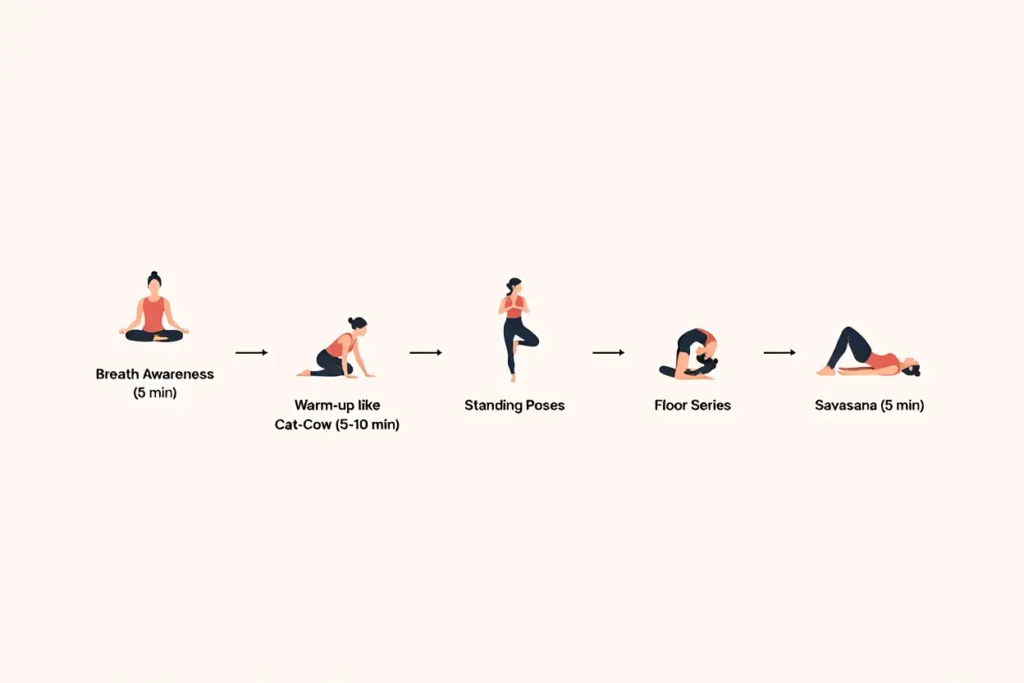
Creating a successful yoga routine for beginners begins with learning the foundational poses and arranging them into a balanced session that safely works all the major muscle groups. This guide offers step-by-step directions to build your initial yoga practice, starting with five essential asanas that develop strength, flexibility, and awareness before progressing further. Following a clear structurewarming up, moving through standing poses, transitioning to floor stretches, and ending with relaxationmaximizes benefits while reducing the risk of injury.
How to structure a beginner yoga session step by step
A well-structured beginner sequence includes five deliberate stages that prepare your body and mind for deeper engagement. Begin with five minutes of centering breathwork, using calm nasal breathing to focus your attention and steady your nervous system. Then, spend 5–10 minutes on gentle warm-ups like neck rolls, wrist circles, shoulder shrugs, and dynamic Cat-Cowthese movements raise your body temperature, awaken your breathing awareness, and loosen your joints.
After warming up, transition into standing poses that build leg strength and postural awareness, holding each pose for 15–30 seconds while maintaining steady breathing. Then, shift to floor poses that encourage deeper flexibility, gradually extending your hold times as your stamina increases through consistent practice. Always conclude with at least five minutes of Savasana, allowing your parasympathetic nervous system to take over so your body can fully absorb the session’s restorative effects.
| Session component | Duration | Purpose | Key actions |
| Breath awareness | 5 minutes | Ground attention in present moment | Seated breathing, count 4-2-6 rhythm |
| Warm-up | 5-10 minutes | Raise body temperature, prevent stiffness | Neck rolls, Cat–Cow, shoulder circles |
| Standing poses | 10-15 minutes | Build leg strength and balance | Mountain Pose, Warrior I, Tree Pose |
| Floor series | 5-10 minutes | Deepen stretches and flexibility | Forward Bend, Butterfly Pose, Child’s Pose |
| Savasana | 5-10 minutes | Integrate benefits, activate nervous system | Lie flat, release all effort, breathe naturally |
This approach keeps your entire body engaged while encouraging steady breathing and mental focus from start to finish. Begin with short 15–20-minute sessions and gradually lengthen them to 30–40 minutes as your strength, flexibility, and confidence growthis makes your yoga routine for beginners sustainable and manageable. For more inspiration, explore seven easy yoga asanas suitable for practitioners of any age or ability.
Key foundational poses every beginner should master
Five foundational asanas lay the groundwork for all other yoga basics for beginners. Repeating these postures improves muscle memory, alignment, and awareness, making form and quality more important than rushing into harder poses. Master one pose before moving to the next so your body can fully integrate each movement pattern.
- Mountain Pose (Tadasana): Stand with your feet hip-width apart, distribute your weight evenly, engage your legs, extend your spine upward, and relax your arms; hold for 30–45 seconds. This pose teaches full-body alignment, which is used in nearly every standing asana, while also building leg and core strength for better daily posture.
- Downward-Facing Dog (Adho Mukha Svanasana): Form an inverted “V” by planting your hands and feet firmly into the ground, lifting your hips high, and extending your spine; gaze between your feet and hold for 30 seconds initially. This posture lengthens your back, stretches your hamstrings, and strengthens your arms and shouldersall essential for building upper-body strength.
- Child’s Pose (Balasana): Sit back on your heels, fold your torso forward, rest your forehead on the mat, and extend or relax your arms; hold for 1–3 minutes. This deeply restorative pose calms the nervous system, gently opens the hips and lower back, and offers a safe, relaxing break anytime during your practice.
- Forward Bend (Paschim Uttanasana): From a standing or seated position with your legs extended, hinge at your hips to fold forward while keeping your spine long; hold for 45 seconds to two minutes, and breathe calmly. This pose stretches your calves and hamstrings, lengthens your spine, and soothes your mind through gentle inversion.
The Sun Salutation (Surya Namaskar) weaves these fundamentals into a flowing 12-step sequence, holding each stage for about 20 seconds across three to five rounds. This dynamic series improves blood circulation, boosts metabolism, and enhances concentration by linking each movement with the breathinhaling to rise, exhaling to fold. Practicing this sequence three to five times a week offers lasting benefits for cardiovascular health, flexibility, and focus, making it ideal for any beginner yoga enthusiast.
How long should you hold poses as a beginner
How long you hold each pose influences how your muscles and nervous system adapt, so it’s important to progress gradually rather than push too hard. Begin by holding each posture for 15–20 secondsor about three to five breathsto let your body safely adjust to new movement patterns. Increase the duration by 5–10 seconds each week as your strength and flexibility improve, and avoid holding through sharp or joint-related pain.
Tune into your body’s signals: steady muscle effort indicates productive growth, while sharp pain means you should ease off or modify the pose. Props can help you maintain safe alignmentuse a yoga block under your hands in forward folds if your hamstrings are tight, place a blanket under your hips during seated poses, or use a strap to extend your reach. These simple tweaks make your practice effective, restorative, and enjoyable as you steadily build your yoga basics for beginners.
How to Build a Lasting Yoga Practice at Home
Making yoga a daily ritual in your own home transforms it from an occasional activity into a lifelong companion for your well-being. This guide explores how to create an inspiring practice space, develop consistent breathing techniques, and safely advance through foundational asanas. With a clear and supportive structure, any beginner yoga practice at home can evolve into a sustainable routine built on consistency, enhanced flexibility, and deeper self-awareness.
Setting Up Your Home Yoga Space and Using Props
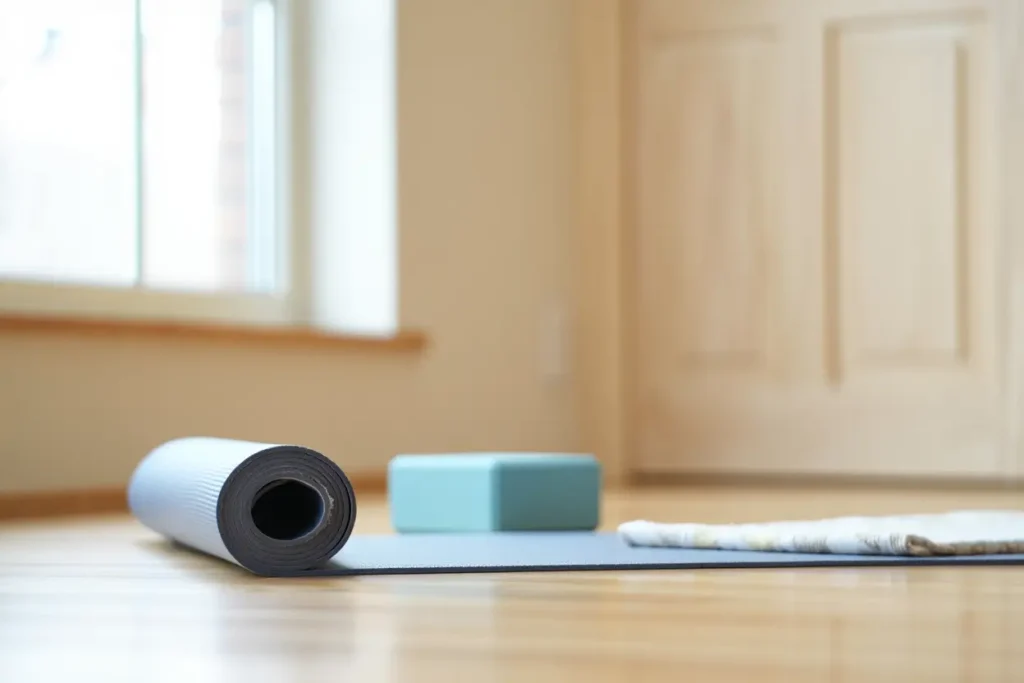
Your practice environment significantly impacts your motivation, concentration, and depth of meditation. Pick a quiet corner, lay down a dependable yoga mat, adjust gentle lighting, and eliminate digital distractions to help your mind naturally transition into a state of calm awareness whenever you enter. This intentional setup supports habit formation, making each home yoga practice feel welcoming rather than like a chore.
- Mat and flooring: Choose a non-slip yoga mat with sufficient cushioning, placing it on an even surface away from furniture to maintain safe alignment and free movement.
- Essential props: Have at least one sturdy yoga block (a second is helpful for symmetry), a strap to assist with reach, and folded blankets to support seated or restorative poses.
- Environmental factors: Keep the room around 68-72 °F, allow fresh air for easy breathing, and silence your phone to preserve uninterrupted practice time.
- Space requirements: A tidy area of about 6 × 6 feet generally provides enough room to fully extend your arms and legs without obstruction.
Props are valuable tools, not signs of weakness. Use a yoga block under your hands in Standing Forward Bend, loop a strap around your feet to ease into hamstring stretches, or place a blanket under your hips to support your spine in restorative poses. These adjustments protect your joints, gently improve flexibility, and help those new to a beginner yoga practice maintain proper alignment as their strength develops.
Breathing Techniques to Anchor Your Home Practice
Conscious breathing builds a bridge between body and mind, turning physical movement into a moving meditation. Start your sessions with simple Pranayama: inhale through your nose for a count of four, pause for two, then exhale for six. Repeat this cycle five times to activate the relaxation response and steady your awareness. This rhythmic pattern quiets the nervous system and prepares you for deeper Hatha yoga exploration.
You can also practice Ujjayi breath by gently constricting the back of your throat to create a soft, ocean-like sound. This makes each inhalation and exhalation an audible rhythm that guides you through each asana. Aim to synchronize breath with movement: inhale as you raise your arms in Mountain Pose, exhale as you fold forward, and maintain this mindful coordination throughout your entire yoga practice. Newcomers looking for guided instruction can explore the studio’s beginner yoga basics classes, which cover techniques that translate smoothly to your home sessions.
Benefits of Yoga and How to Progress Safely
A regular yoga practice offers the body increased flexibility, balanced strength, and reduced discomfort, while the mind benefits from focused breathing and meditation. Research shows that practicing Hatha yoga twice a week can improve hamstring flexibility within about ten weeks, build core strength in poses like Plank, and lower cortisol levels for immediate stress relief. Gentle hip-opening postures, such as Butterfly Pose, also support digestive health and emotional release by activating the body’s relaxation response.
- Flexibility gains: Regular, mindful stretching gradually increases muscle and connective tissue length, allowing you to deepen poses without strain.
- Strength development: Weight-bearing asanas develop functional strength that supports daily activities like lifting, carrying, and maintaining good posture.
- Mental health support: Focused breathing and mindfulness practice improve emotional regulation, sleep quality, and overall present-moment awareness.
- Pain reduction: Proper alignment and balanced muscle engagement help alleviate long-term back or joint discomfort over time.
Progress at your own pace. Extend hold times from 20 seconds to one or two minutes, and only introduce new variations once you feel stable in foundational poses. Keep props nearby, listen to your body’s signals, and acknowledge every small gain in flexibility or balance. Approached with patience, a beginner yoga practice can grow into a confident and restorative journey that enriches your health both on and off the yoga mat.
Frequently Asked Questions
What is the best way to start yoga for beginners?
If you want to start yoga at home, begin by creating a peaceful and dedicated space for your practice. It’s wise to get medical clearance if you have any health concerns. A great way to begin an introduction to yoga is to commit to one 15–20-minute session per week, structured around five key components: mindful breathing, a gentle warm-up, standing postures, floor poses, and a final relaxation in Savasana. Focus initially on mastering five foundational poses with precision, and don’t hesitate to use props from the very start. Aim to be practicing yoga two or three times weekly for about three weeks to help establish a lasting routine. Attending a few yoga classes for beginners can provide valuable hands-on guidance. You can also supplement with online videos. Most importantly, always listen to your body’s signals and view your practice as a holistic integration of body, mind, and soul, rather than just a physical workout.
How quickly will I see results from practicing yoga?
With a consistent practice of at least three times a week, many beginners notice positive changes like improved flexibility, better balance, easier breathing, and a greater sense of awareness within just two to four weeks. Research supports that practicing yoga twice a week for about ten weeks leads to measurable gains in flexibility and balance. Even a single 90-minute session can significantly reduce acute stress by helping to regulate your nervous system. A structured twelve-week beginner yoga program that combines home practice with studio classes often results in notable improvements in strength, endurance, reduced anxiety, and much better sleep quality.
What yoga styles are best for beginners to start with?
Hatha yoga is often recommended for those just starting out because its deliberate pace, clear alignment instructions, and gentle flow sequences build awareness and confidence safely. Gentle Vinyasa is another great option for beginners, as it links movement with breathing to build stamina. Yin yoga, with its longer-held passive stretches, is excellent for developing deep flexibility and patience. Classes focused on meditation or Yoga Nidra can help quiet the mind while teaching profound relaxation techniques. Aayana Yoga Academy’s comprehensive curriculum for yoga for beginners includes foundational hatha yoga, gentle Vinyasa, and meditation sessions. We generally recommend holding off on aerial yoga or other advanced styles until you’ve developed a comfortable practice on the mat, built sufficient upper-body strength, and feel secure in your body awareness.
