
Discover aerial yoga for beginners! Learn what aerial yoga is, its health benefits, essential poses with step-by-step instructions, and expert tips for beginners.
Aerial yoga for beginners blends traditional yoga with a suspended fabric hammock, creating a safe and enjoyable way to explore inversions and improve flexibility. This guide introduces you to the practice and the many health benefits of aerial yoga. We’ll explore foundational postures, provide clear instructions, and share essential safety tips to help you start confidently at Aayana Yoga Academy or any certified studio.
Aerial yoga for beginners: benefits, poses and tips
Aerial yoga combines traditional yoga poses, Pilates principles, and dance movements using a secure, ceiling-mounted hammock. The aerial yoga basics involve using the hammock to support your spine, shoulders, and hips. This setup allows you to float effortlessly while reducing strain on your joints. The sensation of weightlessness helps build confidence, especially for those new to inversions and more advanced moves.
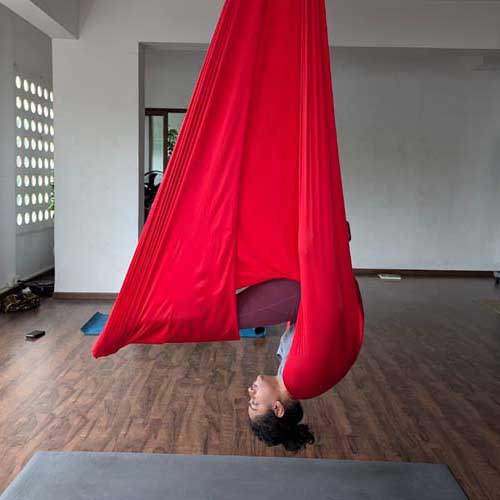
What is aerial yoga and how does it work?
An aerial hammock is made from strong, silky fabric that can support up to 300 kilograms, making it suitable for all body types. The hammock attaches using one of two rigging styles: a double-anchor setup for added stability at the beginner level, or a single-anchor style for greater movement range. In studio beginner aerial yoga classes at Aayana Yoga Academy, instructors adjust the hammock height for comfort, ensuring proper support throughout all aerial yoga poses.
- Fabric composition: The durable silk material is gentle on your skin, even during suspended movements and inverted postures.
- Rigging systems: Double-anchor setups offer maximum stability for beginners, while single-anchor rigs provide experienced students with more freedom.
- Adjustable heights: A certified aerial yoga instructor will customize the hammock’s position based on your comfort level and anatomical needs.
Michelle Dortignac pioneered this aerial practice in 2006 by incorporating fabric hammocks as supportive props. Popular entry-level options include cross positions, star inversions, and variations of single-legged pigeon poses. These foundational aerial yoga poses provide support and a sense of weightlessness, helping newcomers build confidence before moving on to more advanced sequences.
Key health benefits of aerial yoga for beginners
Aerial yoga benefits include significant spine decompression through hammock-assisted traction. This gently lengthens the vertebrae, relieving back pressure and improving overall posture. Other health benefits involve burning approximately 300 calories per aerial yoga class, along with improved circulation and lymphatic flow. On a mental level, safely mastering new poses can reduce cortisol, lower stress, and boost self-confidence.
- Spine decompression: The hammock lengthens the spine gently, easing tension in the neck and lower back to provide daily relief.
- Core strength development: Suspended postures intensely engage your abdominal muscles, building functional strength for a more advanced practice.
- Enhanced flexibility: Active stretching while suspended safely opens your hips, shoulders, and hamstrings without overextending joints.
- Low-impact cardiovascular work: With the hammock supporting your body weight, you get a gentle cardiovascular workout that’s easy on the joints.
Research shows that combining movement, breathwork, and the supportive hammock environment can reduce symptoms of depression. This practice promotes emotional well-being, much like a traditional yoga class.
Essential beginner aerial yoga poses with instructions
Beginning your aerial practice involves learning foundational poses that build confidence and ensure proper alignment. In Hammock-Supported Child’s Pose, you start seated with feet on the floor, then gently fold forward as the fabric supports your upper body. Floating Mountain involves standing firmly on one foot while placing the other in the hammock and stretching your arms upward to experience suspension.
In Aerial Tree Pose, you keep one foot grounded while hooking the opposite ankle in the hammock, then bring your hands to your heart for balance. Supported Forward Fold starts with you seated and feet grounded, allowing the hammock to support your upper back for a deeper stretch. Star Pose involves lying back, fully supported by the hammock with arms outstretched, encouraging relaxation.
| Pose name | Starting position | Key benefits | Beginner level considerations |
| Hammock-Supported Child’s Pose | Seated in hammock, feet on floor | Spinal relaxation, shoulder opening | Start with feet firmly planted for stability |
| Floating Mountain | Standing, one foot grounded, one in hammock | Balance, core engagement, leg strength | Keep hammock at waist height initially |
| Aerial Tree Pose | One foot grounded, opposite ankle hooked in hammock | Balance, ankle stability, grounding | Use wall or instructor support if needed |
| Supported Forward Fold | Seated in hammock, feet on ground | Hamstring opening, spinal traction | Keep knees slightly bent to reduce strain |
| Star Pose | Lying back, fully supported by hammock | Full-body relaxation, chest opening | Perfect pose for first-time flyers |
Beginner tips and safety guidelines for aerial yoga
Wearing appropriate clothing helps prevent accidents and ensures comfort during class. Choose stretchy leggings and a fitted top, and avoid loose clothing, zippers, or sharp jewelry that could damage the fabric. Arrive early to discuss any physical limitations or previous injuries with your instructor; this allows for necessary modifications.
Good nutrition and hydration are vital, so avoid heavy meals before class because aerial yoga poses require ample space for digestion. Stay hydrated and begin with the hammock set low to the ground so you can focus on alignment. Taking this gradual approach builds confidence before you move on to higher suspensions in future yoga classes.
- Medical clearance: Consult a doctor if you have glaucoma, recent surgeries, or high blood pressure, as inversions may not be advisable.
- Certified instruction: Always practice under the guidance of certified professionals at reputable studios that offer proper aerial yoga classes.
- Progressive hammock height: Start with the hammock at a low setting to build trust, gradually raising it as your skills improve.
- Communication with instructors: Report any dizziness or discomfort immediately so your instructor can adjust your position or suggest alternatives.
To fully enjoy the benefits of aerial yoga, keep in mind that first-time students might experience slight motion sickness when returning upright from inversions. This feeling typically diminishes with practice. Over time, your body will adapt to the unique sensations of suspension and shifts in gravity.
Frequently Asked Questions
Is aerial yoga suitable for absolute beginners with no prior yoga experience?
Absolutely. You can safely begin your practice without any prior experience, as the hammock provides essential support to help you move into complex postures. In our beginner aerial yoga sessions, a thorough warm-up effectively builds your strength and flexibility. Everyone starting out with beginner aerial yoga receives excellent guidance and support in their very first aerial yoga class.
Can aerial yoga help relieve back pain and improve spinal health ?
Yes, it can. This practice offers gentle spine decompression by safely suspending and elongating your vertebrae. Consistent participation in aerial yoga classes helps relieve tension, reduce back pain, and significantly improve your core stability. We recommend that pregnant women seek out specialized yoga classes, and individuals with severe osteoporosis should consult a doctor before attending a standard yoga class.
What should I wear and how do I prepare for my first aerial yoga beginners class?
Opt for fitted, stretchy clothing that won’t catch or damage the delicate silk fabric during your practice. Remember to remove any sharp jewelry, have a light snack beforehand, and arrive a bit early so your aerial yoga instructor can properly guide you. Following these simple preparation steps will help ensure a safe, enjoyable, and relaxing aerial yoga experience.
